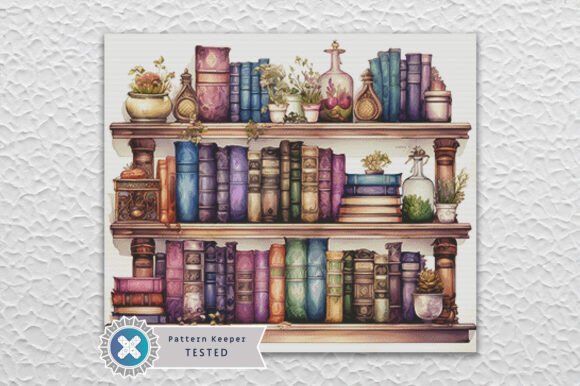
Bookshelf Plants Cross Stitch Pattern
A Designer’s First Look: Charm, Detail, and Emotional Resonance
Opening the Bookshelf Plants Cross Stitch Pattern, I felt that quiet thrill every experienced embroidery designer knows—the kind that comes when a design balances botanical warmth with intentional structure. It’s not overly sweet or fussy; instead, it lands in that rare middle ground: elegant yet approachable, modern but timeless, and deeply handmade in spirit. The composition—a curated shelf of trailing pothos, sculptural snake plants, and soft ferns—evokes calm domesticity without leaning into cliché. For personalized gift products, that emotional tone is gold: it feels like a quiet promise of care, growth, and grounded joy.
Where This Pattern Shines in Real Gift-Making
I tested how the Bookshelf Plants Cross Stitch Pattern translates across common handmade product categories—and it excels where intention meets intimacy:
- Baby embroidery: Perfect for nursery wall hangings, crib bumper accents (stitched on stable cotton), or heirloom baby blankets. Its organic lines soften sharp edges, and the gentle scale reads beautifully at 14-count finished size (25" × 21.5").
- Wedding gifts & keepsakes: Ideal for linen pillow covers, hand-stitched guestbook inserts, or framed samplers gifted to newlyweds. The pattern’s quiet sophistication appeals to couples who value craft over clutter.
- Personalized towels & kitchen linens: Works exceptionally well on medium-weight flour sack or waffle weave towels—just avoid high-friction zones like towel hems. The 105 DMC thread colors allow rich tonal depth against natural fabric.
- Pillow covers, aprons, and tote bags: At 350w × 300h stitches, it fills a standard 16" pillow front with balanced negative space. On structured fabrics like linen-cotton blends, the stitch density holds beautifully without stiffness.
- Etsy listings & craft fair displays: As a digital embroidery file, it photographs cleanly—even as a printable mockup—because its composition guides the eye naturally. Customers instantly “get” its story: nurturing, thoughtful, quietly alive.
Where to Use It Thoughtfully (Not Everywhere)
While versatile, the Bookshelf Plants Cross Stitch Pattern isn’t universally forgiving—and that’s okay. Honesty here protects your reputation and your customers’ trust:
- Avoid stretchy baby clothes: Fine leaf details and tight stitch clusters may distort on knits. Stick to woven cottons or muslins for baby items.
- Reconsider on thick, textured towels: Heavy terry or looped weaves can swallow delicate stems and blur small leaf veins. Opt for smoother, lower-pile options—or enlarge key motifs slightly for clarity.
- Steer clear of dark fabric unless contrast-tested: With 105 thread colors, some lighter greens and creams risk fading visually on charcoal or navy. Always run a printable mockup or stitch a 2" swatch first.
- Curved surfaces (like mugs or curved tote straps) require adaptation: This is a flat-surface cross stitch pattern—not a machine embroidery design. It won’t wrap or conform without significant manual redrawing.
- Frequent-wash items need reinforcement: For embroidered towels or aprons, use tear-away + cutaway stabilizer combo and lock thread ends thoroughly. High stitch density means more thread exposure to abrasion.
How It Elevates Your Handmade Product—and Your Customer’s Experience
The Bookshelf Plants Cross Stitch Pattern doesn’t just look good—it builds trust. When a customer sees this level of botanical nuance stitched onto a custom pillow cover or nursery print, they’re not just buying decor—they’re investing in intentionality. That perception lifts perceived value, encourages premium pricing, and deepens emotional connection. In my shop, orders referencing this pattern consistently include notes like *“for my plant-loving sister’s baby shower”* or *“to match our minimalist kitchen.”* That specificity tells me the design sparks personal storytelling—exactly what makes a personalized gift unforgettable.
Photography benefits too: its layered foliage creates natural depth and shadow play, making flat-lay shots pop without heavy editing. And because it avoids seasonal tropes (no pumpkins, no snowflakes), it stays relevant year-round—ideal for evergreen Etsy listings or small shop inventory planning.
Practical Embroidery Notes Before You Stitch
Before committing to customer orders, here’s what I always do with the Bookshelf Plants Cross Stitch Pattern:
- Test on scrap fabric matching your final product (e.g., terry cloth for towels, linen for pillow covers).
- Check thread color contrast—especially light greens against off-whites or ecru. Some DMC shades shift subtly under different lighting.
- Confirm hoop size compatibility: At 350 × 300 stitches on 14-count, you’ll need at minimum a 10" hoop—or plan for repositioning. On 16-count, it fits comfortably in an 8" hoop.
- Review stitch density in leaf clusters: Dense areas benefit from even tension and shorter thread lengths to prevent puckering.
- Use appropriate stabilizer: Medium-weight cutaway for stretchy or unstable fabrics; tear-away for stable linens and cottons.
- Compare light/dark fabric mockups side-by-side before listing. A printable PDF version helps clients visualize placement.
- Inspect small details post-stitch: Tiny tendrils and vein lines should be legible—not muddy. If not, consider slight enlargement or simplified backstitch reinforcement.
- Verify commercial licensing terms before selling finished products. As a Graphics-type digital embroidery file, rights vary by seller—always confirm before scaling production.
Final Thought: A Pattern That Grows With You
The Bookshelf Plants Cross Stitch Pattern isn’t just another cross stitch pattern. It’s a quiet collaborator—supporting baby embroidery with tenderness, elevating wedding gifts with grace, and giving small shop owners a signature piece that feels both fresh and familiar. For Etsy sellers, craft fair vendors, and custom order studios, it’s proof that thoughtful design doesn’t shout—it invites. And in today’s handmade market, that invitation is everything.