Botanical Flowers Embroidery Patterns
A Designer’s First Look: Delicate, Timeless, and Surprisingly Versatile
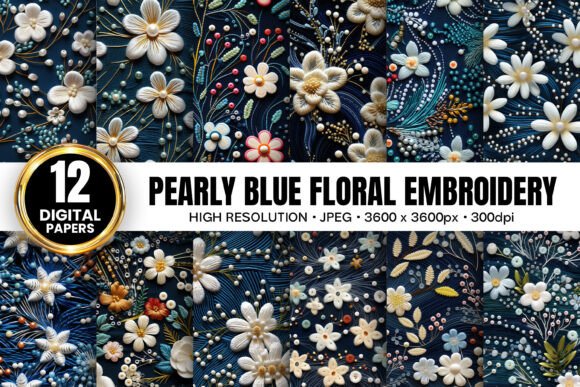
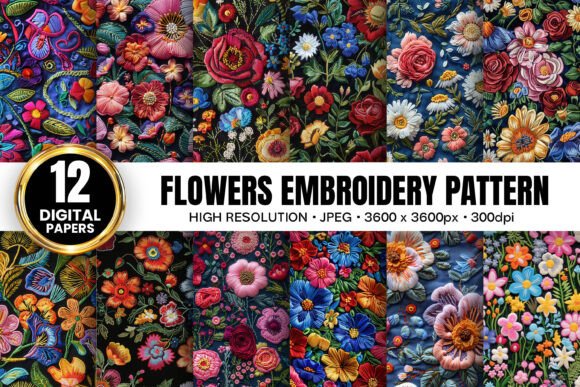
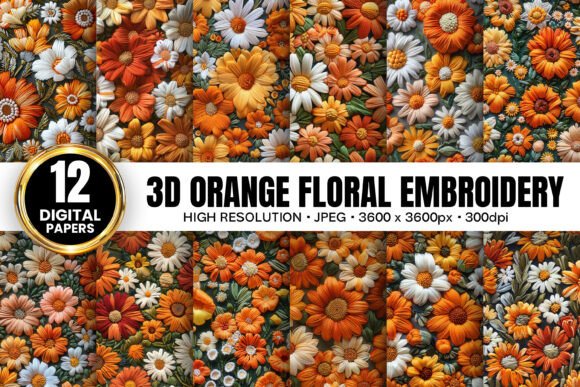
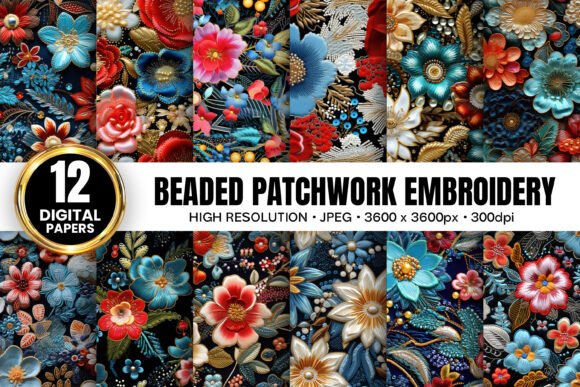
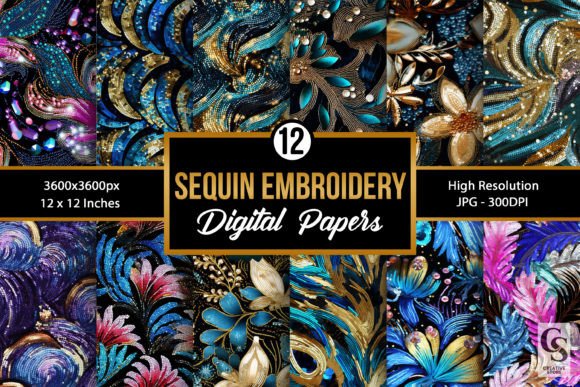
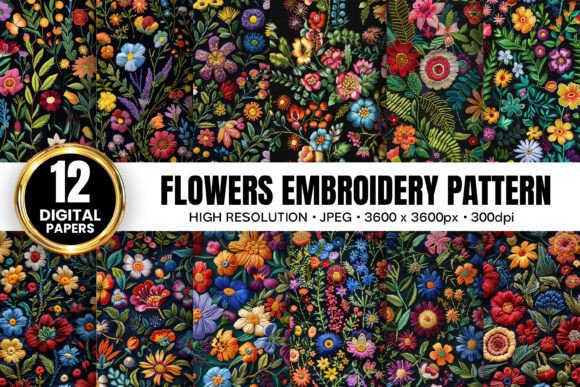
When I opened the Botanical Flowers Embroidery Patterns ZIP file, what struck me first wasn’t technical precision—it was mood. Twelve high-resolution digital papers at 300 DPI, each 3600 x 3600 pixels (12″ x 12″), all in JPG format. No vector files, no stitch files—just clean, art-directed botanical motifs: trailing vines, clustered blossoms, single-stem studies, and subtle asymmetrical arrangements. These aren’t clipart florals. They feel hand-drawn, with soft edges, gentle negative space, and a quiet confidence in their simplicity. That matters—because when you’re translating a digital paper into real thread on fabric, the design’s visual rhythm directly shapes how it stitches, wears, and reads to your customer.
Real Project Test: A Linen Tote Bag for a Local Boutique
Last week, I used one of these patterns to develop a limited-run embroidered tote for a neighborhood apothecary shop. We chose a mid-tone sage linen blend—textured but stable—and opted for a medium-density satin stitch fill with tonal green and cream threads. The result? Crisp definition without stiffness. Petals held shape; stems flowed naturally across the curved base of the bag. Customers didn’t just notice the embroidery—they paused, touched the texture, asked about the “artist.” That’s the quiet power of Botanical Flowers Embroidery Patterns: they elevate handmade product perception without shouting. They work equally well on a baby onesie (scaled down, light stabilizer), a heavyweight apron pocket, or a tea towel hem—always reading as intentional, not decorative filler.
Where It Shines—and Where You’ll Want to Pause
Botanical Flowers Embroidery Patterns excels in projects where elegance meets wearability:
- Custom apparel: Sweatshirt sleeves, t-shirt chest placements, and cap fronts benefit from the patterns’ balanced scale and organic flow—no harsh angles to fight on curved surfaces.
- Personalized gifts: As a holiday embroidery or wedding gift accent, the botanical theme reads warm and thoughtful—not trendy or dated.
- Small business merchandise: For Etsy sellers or craft fair vendors, these make strong printable mockups and cohesive branding assets across tote bags, pillow covers, and nursery decor.
- Commercial embroidery: Though these are digital papers—not machine embroidery files—you can confidently digitize them for client work. Their clarity and moderate detail translate cleanly into satin and fill stitch without excessive density.
But be mindful: these aren’t built for ultra-fine detail work. On stretchy knits or thin voile, intricate inner veins or tight clusters may lose legibility unless digitized with extra underlay and reduced stitch density. Dark fabrics demand careful thread color contrast testing—what reads softly on ivory linen can disappear on charcoal. And avoid placing dense floral groupings near seams, hems, or curved caps without adjusting hoop size and stabilizer strategy.
Design Integrity Meets Practical Craftsmanship
What sets Botanical Flowers Embroidery Patterns apart isn’t novelty—it’s restraint. There’s no forced symmetry, no over-rendered realism. Each motif breathes. That makes it easier to adapt: scale down for a delicate baby embroidery, mirror for twin pillow covers, or isolate a single bloom for an embroidered patch. As a designer, I appreciate that the negative space is intentional—not empty, but active. It gives thread room to settle, fabric room to drape, and the eye room to rest. That directly supports customer trust: when a finished product looks polished *and* handmade—not mass-produced or digitally flat—it signals care. And care sells.
Your Must-Do Checklist Before Stitching
Because these are high-res digital papers—not ready-to-embroider files—you’ll need to digitize or trace them. Here’s what I do every time:
- Test on scrap fabric first—especially if using textured weaves or dark backgrounds.
- Check thread color contrast in natural light and on camera; botanical palettes can mute easily.
- Review stitch density in your digitizing software—avoid overloading small petals or overlapping stems.
- Confirm hoop size compatibility with your intended placement (e.g., 4″ hoop for cap fronts, 6″+ for tote centerpieces).
- Inspect fine details at actual stitch scale—tiny buds or vine tips may need simplification.
- Test black-and-white mockups to ensure value contrast holds up across lighting conditions.
- Use appropriate stabilizer: cutaway for knits, tear-away for stable wovens, mesh for lightweight linens.
- Verify licensing before selling finished items or bundling these as design assets—these are graphics, not commercial-use embroidery files unless stated.
Final Thought: A Quietly Confident Design Asset
Botanical Flowers Embroidery Patterns won’t shout from a crowded craft fair table—but it will draw people in. It’s the kind of pattern that feels like a collaboration between designer and maker, not a shortcut. Whether you’re building a cohesive line of nursery decor, launching a small shop product, or stitching personalized gifts for clients, these papers offer grounded beauty and real-world flexibility. They respect fabric. They respect thread. And most importantly, they respect the time and intention your customers associate with truly handmade work. That’s not just design—it’s value, stitched in.